



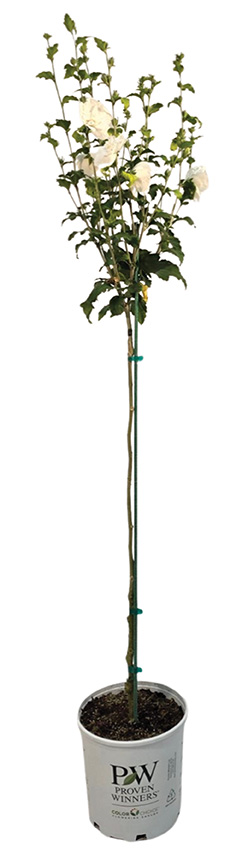
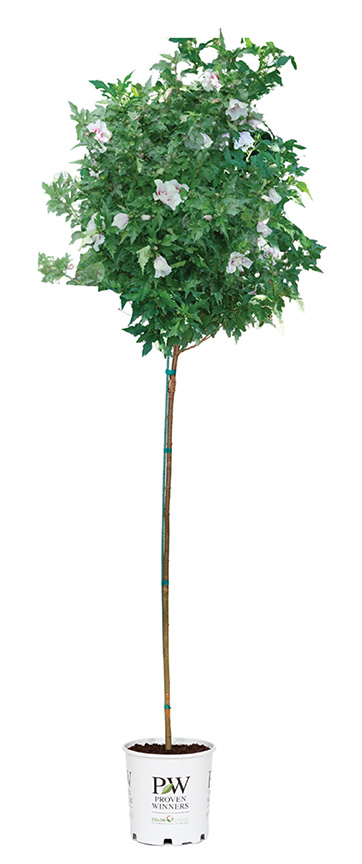
Starblast Chiffon® Rose of Sharon (Hibiscus syriacus ‘Rwoods6’ PP30270). Photo courtesy of Robinson Nursery
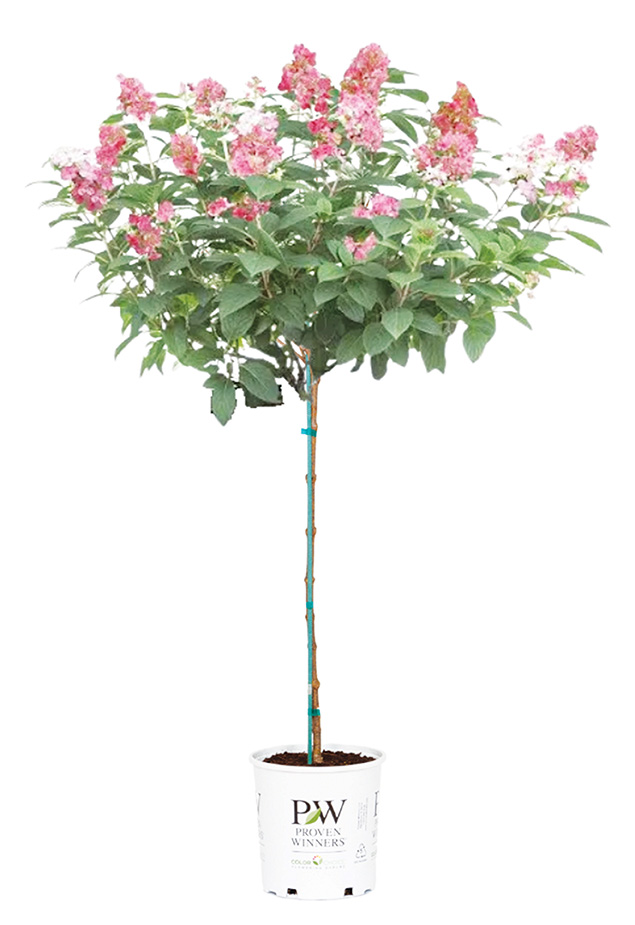
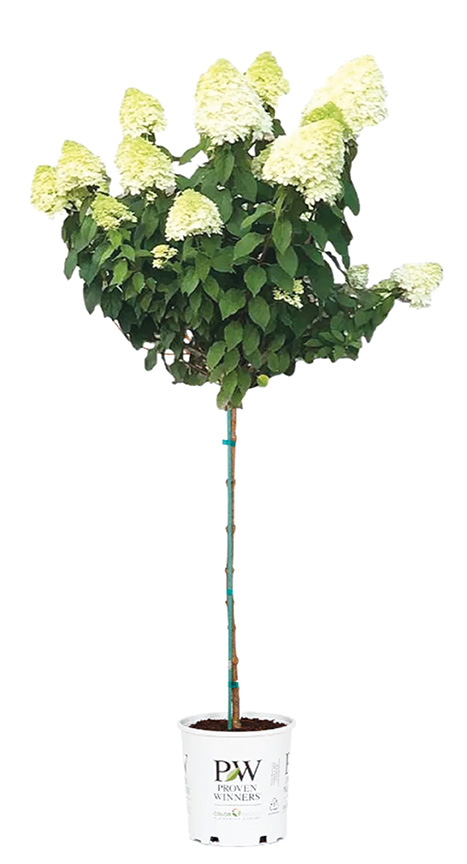
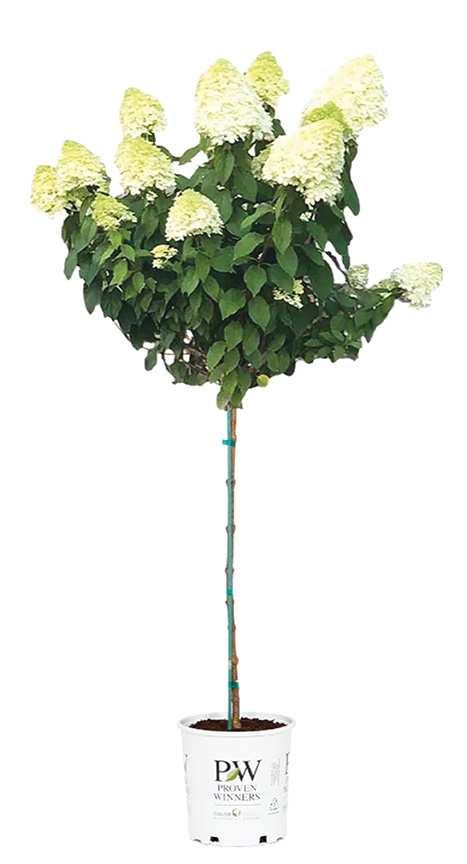
Vanilla Strawberry™ Panicle Hydrangea (Hydrangea paniculata ‘Renhy’ PP20670). Photo courtesy of Robinson Nursery
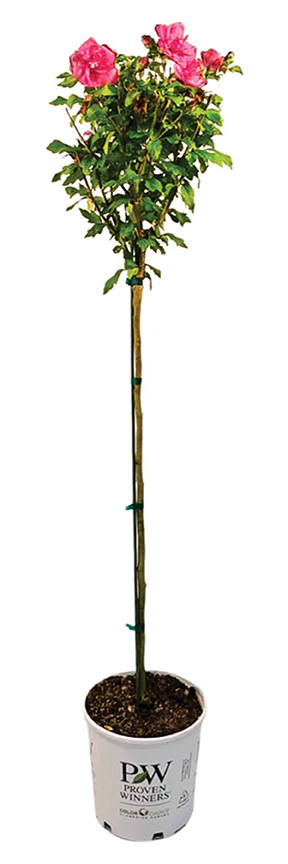
Magenta Chiffon® Rose of Sharon (Hibiscus syriacus ‘Rwoods5’ PP29683). Photo courtesy of Robinson Nursery

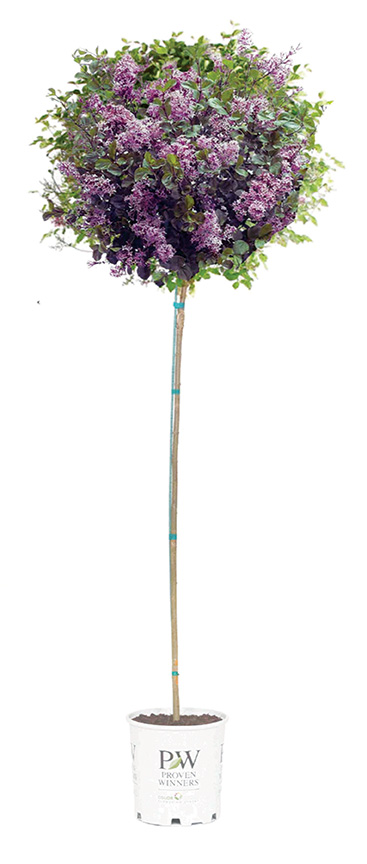
Baby Kim® Lilac (Syringa × ‘SMNSDTP’). Photo courtesy of Robinson Nursery


Grace N’ Grit™ Pink BiColor Rose (Rosa ‘Meiryezza’PP30844). Photo courtesy of Monrovia nursery company

Nitty Gritty® White Rose (Rosa ×’RUIBG0025A’ PP33151). Photo courtesy of Monrovia Nursery Company

Minerva Rose of Sharon
(Hibiscus syriacus ‘Minerva’).
Photo courtesy
of monrovia Nursery Company

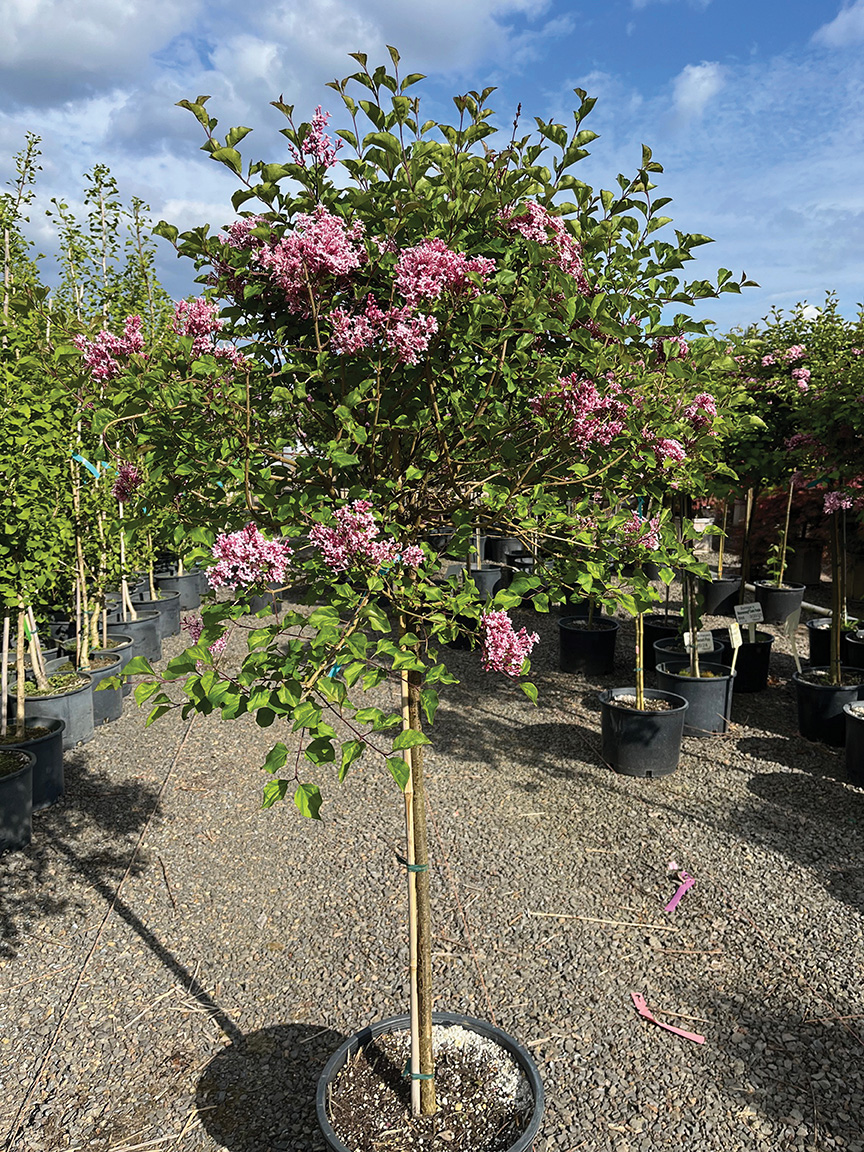
Flowerfesta Pink Dwarf Lilac (Syringa meyeri ‘Anny2013-19’ PP32908). Photo courtesy of Eshraghi Nursery

Tree-form hydrangeas require more care, including a hard cut back in the fall or early spring, which causes them to grow more new stems. Photo courtesy of First Editions Trees & Shrubs
As the demand grows for container gardening on patios, nurseries are responding by offering shrubs that have been shaped into trees. These can create a large impact in a small space.
Brothers Chris and Josh Robinson grew up in the nursery industry. In 2008, they officially joined their family’s business, Robinson Nursery Inc. (Farwest booth #18028), in McMinnville, Oregon. That was right when the Great Recession was starting.
Chris Robinson said it was a tough time to be starting out their careers. He and his brother had to learn quickly what truly mattered to customers.
However, even when the economy was struggling, Robinson noticed that customers were still buying the nursery’s Hydrangea ‘Limelight’ trees, (Hydrangea paniculata ‘Limelight’). ‘Limelight’ features huge cone-shaped blooms as an ornamental shrub that growers meticulously shape to look like a tree. That became a defining moment for the Robinsons.
“It showed us that people are willing to invest in exceptional plants — especially when the genetics are strong and the form is unique,” Chris said.
The Robinsons were inspired to offer more tree-form shrubs. “These are plants traditionally grown as shrubs that we carefully train into a single trunk with a structured canopy — creating that clean, elevated ‘lollipop’ form,” Robinson said.
The nursery went on to develop plants that could stand apart in the marketplace through their growing system and team of growers. They also produce tree-form shrubs for the Proven Winners brand.
Growth in patio gardening
“At the same time, we saw a major shift happening — more people buying online, smaller living spaces, and a growing number of consumers without traditional yards,” Robinson said. “But what most people do have is a patio.”
So, he started an additional business called My Patio Tree (MyPatioTree.com), an online store selling ornamental flowering trees meant especially for a patio.
Madison House has observed similar trends. As the consumer marketing manager at Bloomin’ Easy (Farwest booth #12044), thinking about how plants fit into real people’s lives and spaces is a big part of her job.
“I’m especially interested in helping make gardening feel more approachable and exciting for younger homeowners and newer gardeners, many of whom are working with patios, porches, balconies, or smaller yards instead of large landscapes,” House said.
She said tree-form shrubs bring an elevated, designed look to an area without taking up a large amount of room. “For patio gardening, that’s such a win because people still want that ‘wow’ factor, even in a smaller area,” she said.
Mary Mooney, an account manager at Eshraghi Nurseries LLC (Farwest booth #12025), has also seen a higher profile for tree-form shrubs. They have become an important part of Eshraghi’s plant offerings. They can play a big role in container designs as well as in the landscape, she said.
“They provide height where a small tree might not be an option,” Mooney said. “Or when wanting to create something with more drama, tree-form shrubs can be foundational elements.”
Mooney suggested pairing the height of the tree-form shrubs with filler and spiller plants underneath, such as trailing plants, bushes and wispy grasses.
“Personally, I have tried many different varieties of tree-form shrubs and found them to be versatile and a great focal point in the ground or in a container,” Mooney said.
Purpose and process
House said tree-form shrubs combine beauty and structure in a way that works well in smaller and more styled spaces.
“You get all the charm of a flowering or foliage shrub, but in a form that feels a little more polished and architectural,” House said. “They’re perfect for framing a front entrance, adding height to a container combo, or creating a focal point on a patio.”
Robinson added that a tree-form shrub creates an impact in a compact space. It can become the centerpiece of an area, providing height and presence without the need of a full yard.
The process of shaping a shrub into a tree form takes time and intention.
“We start with a shrub and carefully train it into a single trunk by selective pruning,” Robinson said. “Over time, we remove lower growth and shape the top into a balanced canopy.”
He said it takes years to get the shape and effect just right.
Origins
According to Mooney, grooming shrubs into tree form has been practiced since before 2,000 B.C. in China.
“This technique evolved to gain popularity in the Mediterranean because it helped with selecting a stronger rootstock for fruit trees,” she said, giving olives and citrus as examples.
“It was in ancient Roman times that this look became an artistic staple of gardens where a variety of weeping, dwarf and other forms could be experimented with for their visual interest,” Mooney said.
Tree-form shrubs also have a long history of adding structure and symmetry to formal garden designs. Robinson said European gardens have been using them for centuries.
House said over time, the trend has evolved to become relevant for modern gardeners.
“As outdoor spaces have become more of an extension of the home, people want plants that feel intentional and stylish, especially in patios and smaller living spaces,” she said, adding that tree-forms do well to meet that demand. “They add height, softness, and a bit of drama without taking over the whole area.”
Robinson said these uniquely shaped shrubs are more accessible than they had been in the past.
“What used to be more niche or high-end is now something everyday homeowners can enjoy,” Robinson said. “People want something clean, structured and beautiful — and this fits perfectly.”
Tree-form shrubs have gained popularity in outdoor living areas.
Examples
Some of the most popular shrubs to shape into trees include Hydrangea, roses (Rosa), Hibiscus and lilacs (Syringa).
Certain evergreens or flowering shrubs, such as flowering cherries, can be trained into a standard, which is another term for tree form.
Mooney said Boxwood (Buxus) is one popular example of a shrub that can be tree-formed, stemming from the formal European garden designs.
“Boxwood are fairly low-maintenance and only require light trimming to keep their shape a couple of times a season,” Mooney said.
She said conifers can provide a similar type of year-round interest as a boxwood without the maintenance. They are easy to grow in general and provide a range of colors and textures to the landscape.
Advice for growing to shape
Mooney said tree-form hydrangeas require more care, including a hard cut back in the fall or early spring, which causes them to grow more new stems.
“Throughout the season they will need regular dead-heading maintenance as spent blooms finish and new ones take their place,” Mooney said. “Hydrangea do like water and will need regular attention paid to their fertilizer requirements.”
House’s biggest piece of advice is to be consistent on the maintenance to keep the desired shape. “Remove any growth coming from the trunk, keep the head balanced with regular pruning, and stake young plants if needed so the trunk stays straight while it develops,” House said.
She also suggested choosing a variety with a naturally strong habit to start with so that shaping becomes easier.
For container gardening on a patio, House said watering and feeding is even more important because the plants rely on the gardener for everything.
Robinson’s advice is to keep it simple and not overthink it because the plants are meant to bring joy instead of stress.
“Prune to maintain the shape of the canopy and remove any growth coming from the trunk,” Robinson said. “And most importantly—start with a well-grown tree. When the structure is right from the beginning, maintenance becomes easy.”
Future of tree-form shrubs
House, Robinson and Mooney all predict this trend will continue to grow as more people garden in smaller spaces. These consumers are leaning toward plants with high visual impact without needing a big backyard.
“Tree-form shrubs fit really well into that future because they feel premium, stylish, and space-smart all at once,” House said. “I also think we’ll keep seeing more interest in plants that help people create a curated, designed look at home, especially as patios and outdoor entertaining spaces continue to matter more.”
Robinson said gardeners are craving beauty and simplicity and want something that feels intentional.
“I also think you’ll see more creativity — mixing colors, layering plants and really using these trees as a design element,” Robinson said.
From the July 2026 issue of Digger magazine | Download PDF of article